Banking & payments
KCB Group 9-Month 2026 Results: What the KES 58.6 Billion Profit Means for Customers
KCB Group made KES 58.6 billion after tax in the 9 months to 30 September 2026. Income, bad loans, capital and what it means for customers.
This content is editorially independent. We do not currently receive payment from the companies we feature.
Key facts (9 months to 30 September 2026)
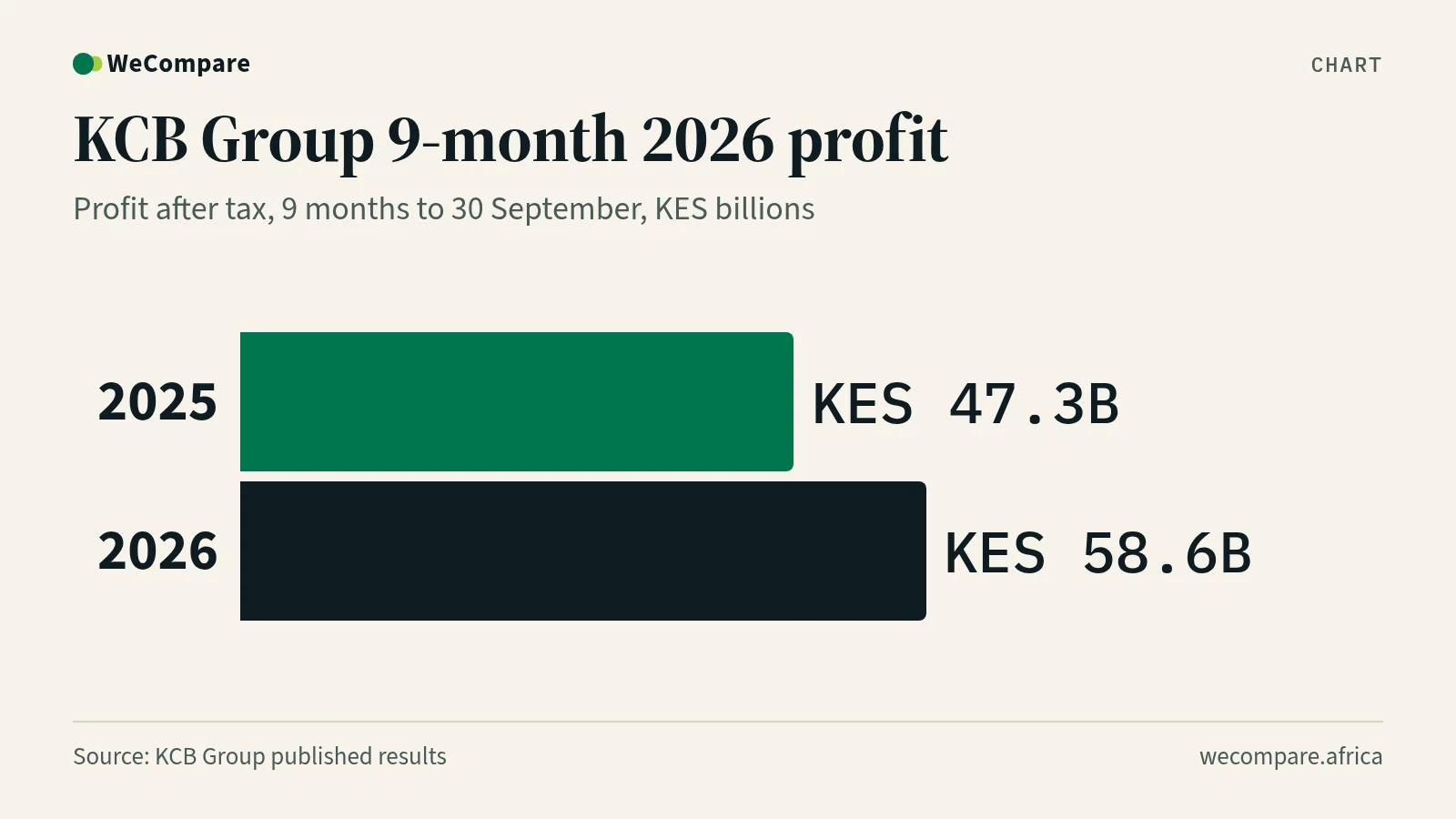
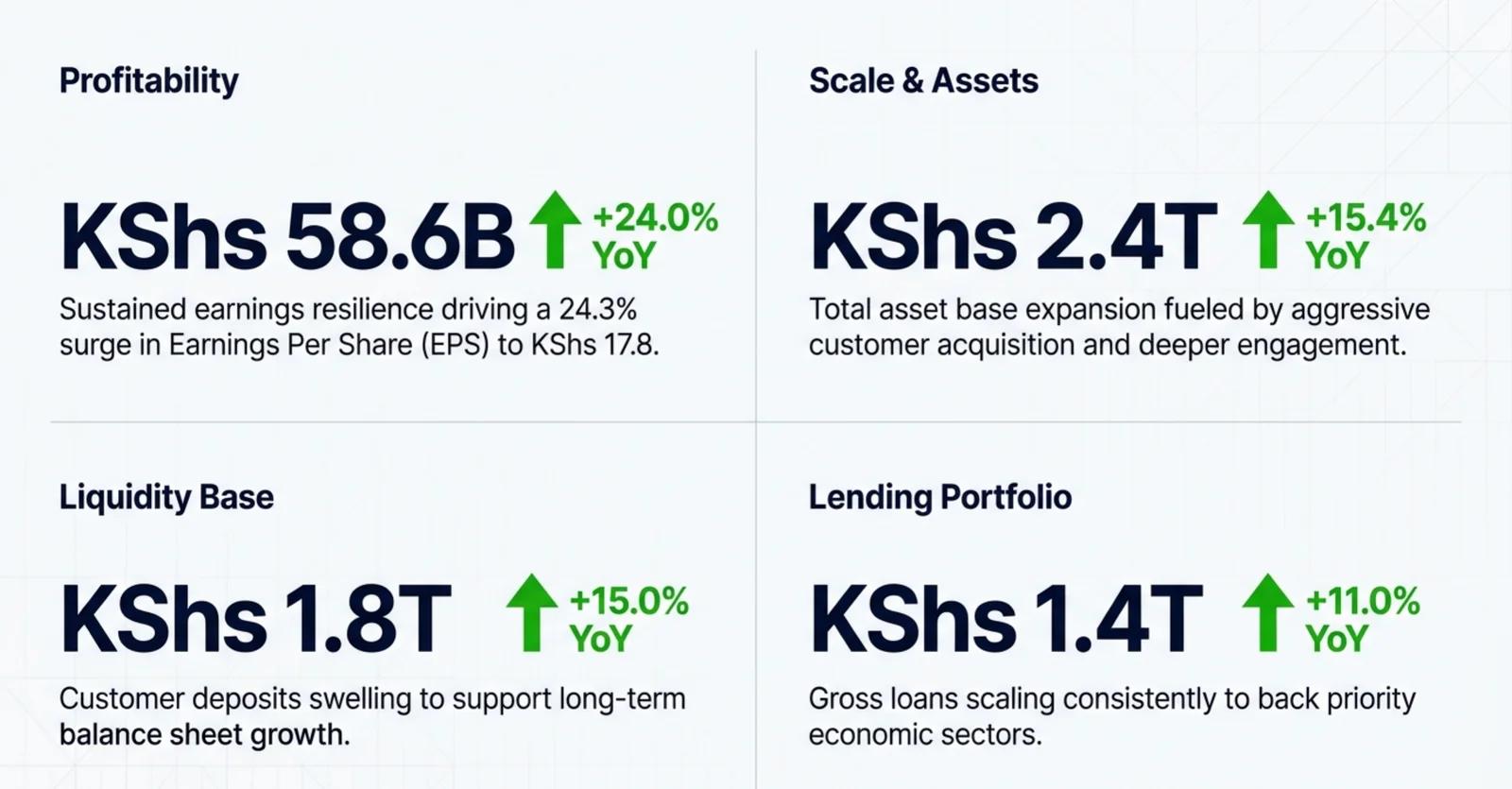
- Profit after tax: KES 58.6 billion, up from KES 47.3 billion (about 24%)
- Total income: KES 167.8 billion, up 12.3%
- Total assets: about KES 2.4 trillion, up 15.4%
- Customer deposits: KES 1.8 trillion, up 15.0%
- Loans: KES 1.4 trillion, up 11.0%
- Non-performing loan ratio: 13.3%, down from 17.8%
The headline: profit up about 24%
KCB Group reported a profit after tax of KES 58.6 billion for the nine months to 30 September 2026, up from KES 47.3 billion in the same period of 2025. Earnings per share rose 24.3% to KES 17.80. Return on equity was 22.1%.
2 things to know before you quote these numbers.
It is a 9-month result, not a quarter. Many headlines, and some company slides, say "Q3". The figures are for the 9 months from January to September.
You may see KES 57.1 billion elsewhere. The Standard reported KES 57.1 billion. KES 58.6 billion is the group profit after tax reported by Capital FM, TechTrends KE and Soko Directory. The smaller figure looks like the profit attributable to shareholders, which fits an earnings per share of KES 17.80, but we have not confirmed that against KCB's results pack. We use KES 58.6 billion and label it as group profit after tax.
Where the money came from
Total income grew 12.3% to KES 167.8 billion from KES 149.4 billion.
- Funded income, which comes from interest earnings, rose 8.2% to KES 112.9 billion.
- Non-funded income, which includes fees, commissions and foreign exchange, rose 21.8% to KES 54.9 billion.
Mobile lending is a big part of the story. KCB's mobile loan disbursements rose 26% to KES 492 billion, about KES 1.8 billion a day. If you use a mobile loan, our guide on the true cost of mobile loans in Kenya shows how to compare what you pay.
Deposits grew faster than loans
Total assets rose 15.4% to about KES 2.4 trillion. Customer deposits grew 15.0% to KES 1.8 trillion, while loans grew 11.0% to KES 1.4 trillion. When deposits grow faster than lending, a bank has more money coming in than it is lending out. Total equity rose 17.3% to KES 362.0 billion.
Bad loans fell, but they are still high
The non-performing loan (NPL) ratio fell to 13.3% from 17.8% a year earlier. In plain terms, a non-performing loan is one the borrower has stopped repaying on time, usually overdue by 90 days or more. The stock of bad loans fell 17.1% to KES 184.1 billion from KES 222.1 billion. Loan loss provisions, the money set aside for loans that may not be repaid, fell 9.1% to KES 16.6 billion. Cost of risk improved from 2.1% to 1.7%.
Some reports say cost of risk "rose" from 2.1% to 1.7%. That is a fall, and it is good news for the bank.
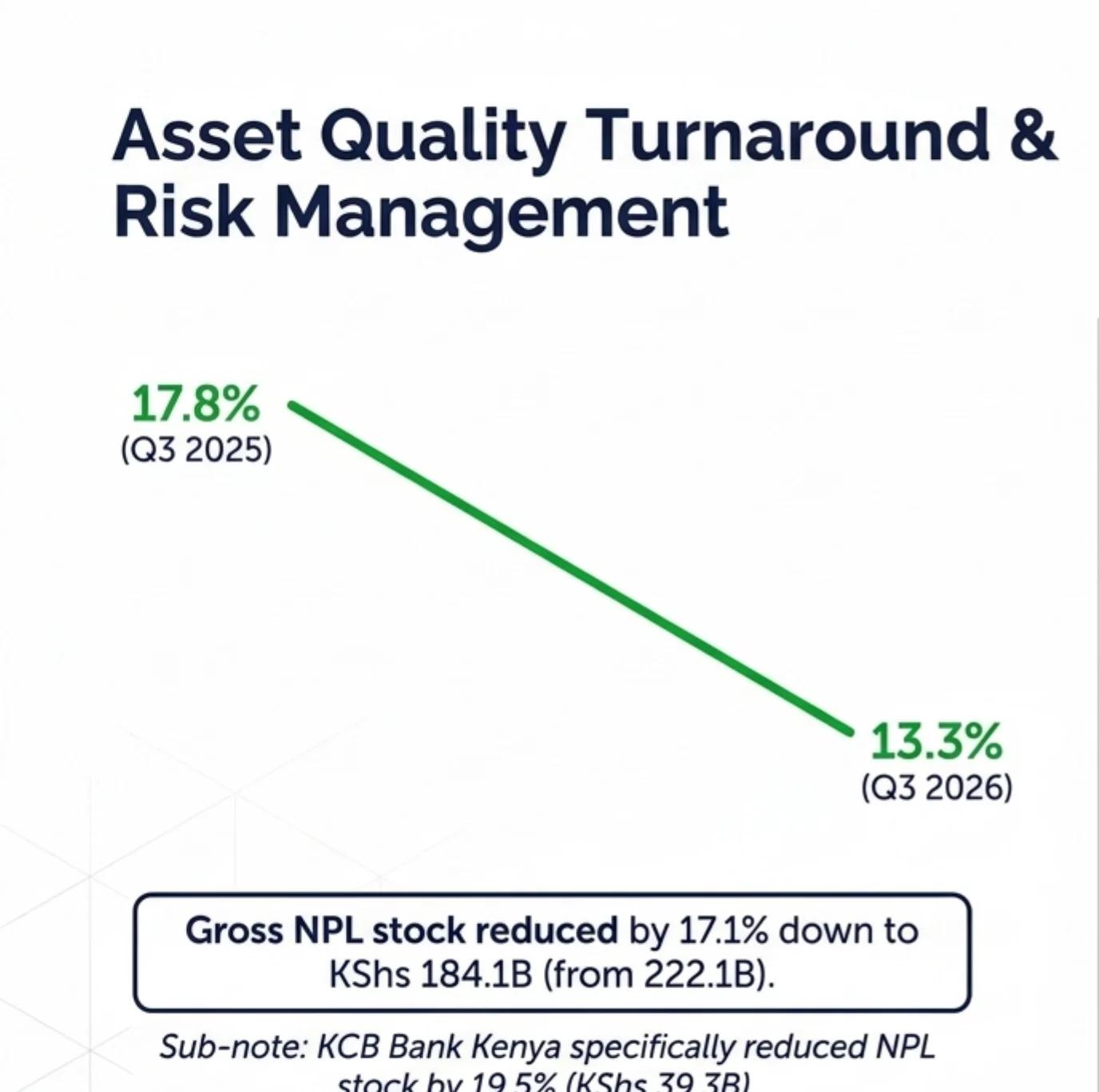
A ratio of 13.3% is still more than 1 in every 8 shillings lent. The trend is clearly improving, which is what matters most. KCB's NPL ratio was 15.1% at June 2026 in our H1 review, so it fell another 1.8 percentage points in the third quarter. For how this compares with other large banks, see our Kenya bank performance H1 2026 review and our largest banks in Kenya guide.
Capital is well above the legal minimum
Banks must hold a minimum amount of capital against the risks they take. KCB Group reported:
- Core capital to risk-weighted assets: 18.0%, against a minimum of 10.5%
- Total capital to risk-weighted assets: 21.1%, against a minimum of 14.5%
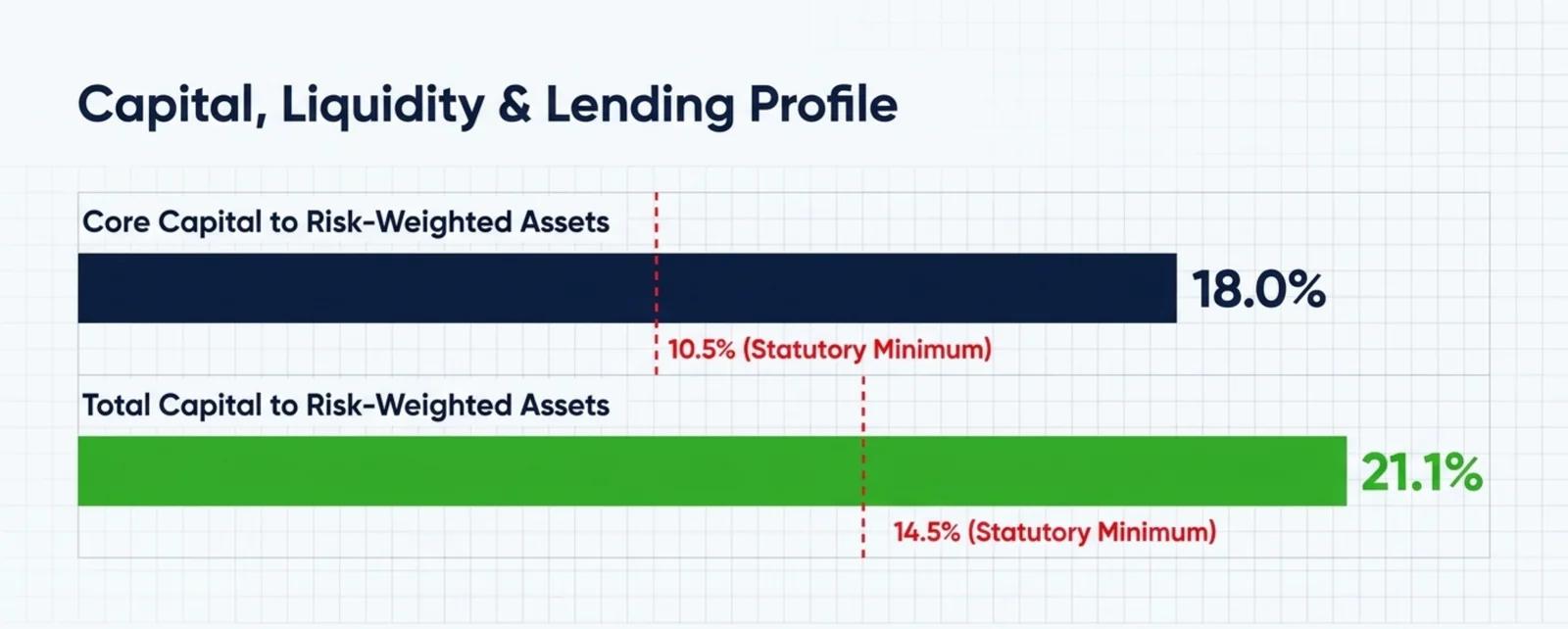
This means KCB has room to absorb losses. It does not guarantee that any bank is risk free, and it says nothing about the rates or fees you will pay.
Kenya still earns most of the profit, but the region is growing
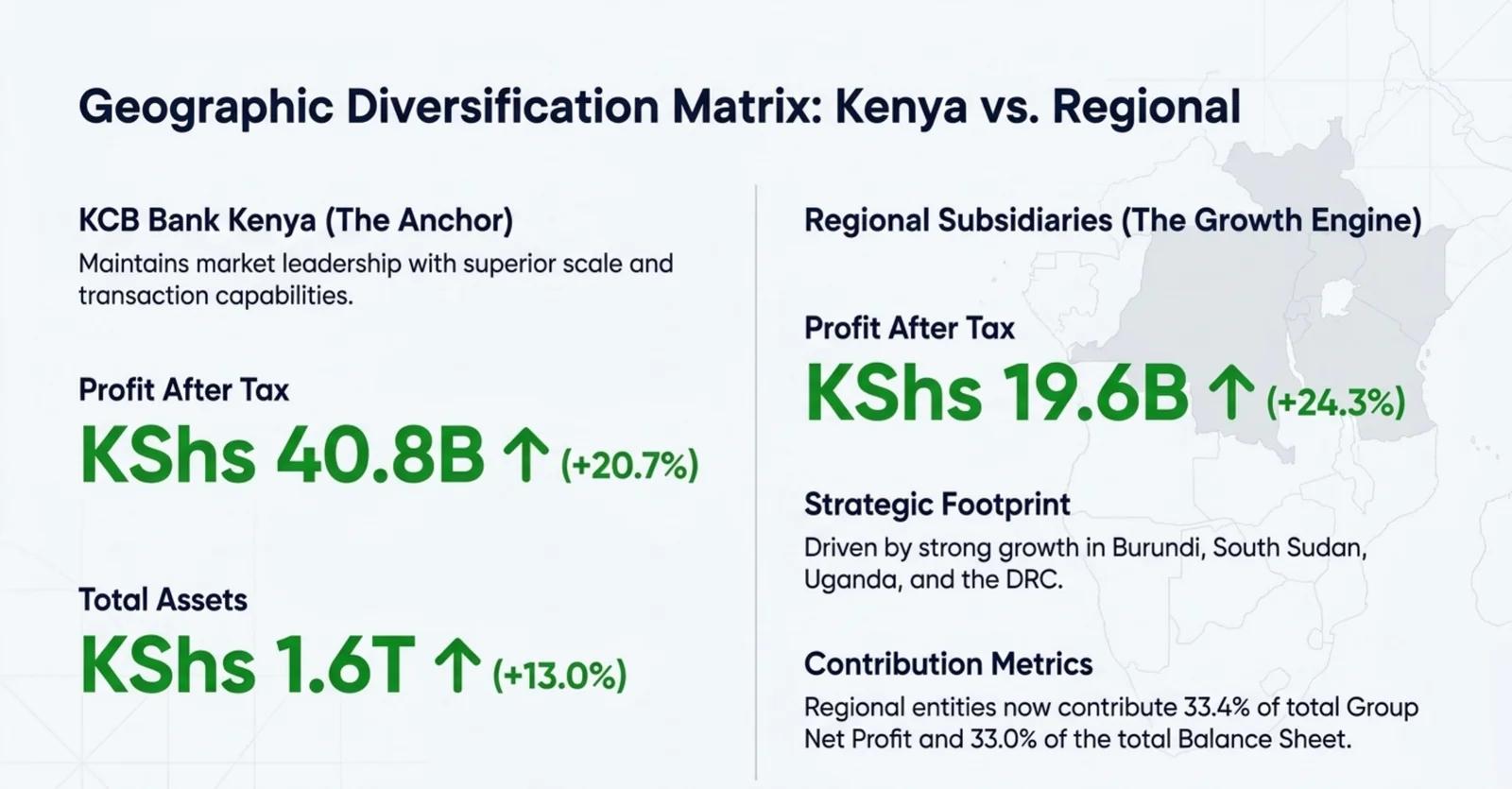
KCB Bank Kenya made a profit after tax of KES 40.8 billion, up 20.7%, with assets of KES 1.6 trillion, up 13.0%. The regional subsidiaries earned KES 19.6 billion, up 24.3%. They now supply 33.4% of group profit and 33.0% of the balance sheet, with growth led by Burundi, South Sudan, Uganda and the DRC. KCB also raised its stake in Trust Merchant Bank (TMB) in the DRC from 85% to 98%.
Do not add the two segment profits together. KES 40.8 billion plus KES 19.6 billion is more than the KES 58.6 billion group figure, so group-level items must make up the difference.
What this means for you as a customer
- Profit does not set your price. These results do not show KCB's savings rates, loan interest rates or account fees. To see current charges, use our Kenya bank charges comparison and the KCB Bank Kenya page.
- Check the loan cost, not the headline. With KES 492 billion lent through mobile channels, compare the total cost of a loan, not only the monthly rate.
- Strong capital and falling bad loans are good signs for stability. They are not a guarantee, and one set of results is not a full picture. Compare KCB with other banks in our best banks in Kenya guide.
Frequently asked questions
How much profit did KCB Group make in 2026?
KCB Group reported a profit after tax of KES 58.6 billion for the 9 months to 30 September 2026, up about 24% from KES 47.3 billion.
Is this a Q3 or a 9-month result?
It is a 9-month result. Many headlines call it Q3, but the figures cover January to September 2026.
What is the NPL ratio?
It is the share of loans that borrowers have stopped repaying on time. KCB Group's NPL ratio fell to 13.3% from 17.8%.
Is KCB safe?
KCB reported capital ratios of 18.0% and 21.1%, above the legal minimums of 10.5% and 14.5%. That is a positive sign, but this article is not financial advice and no bank is risk free.
Sources and how we wrote this
Figures are for the 9 months to 30 September 2026 (unaudited) and were checked against reports by Capital FM, TechTrends KE, The Standard and Soko Directory on 23 November 2026. We will link KCB's official results pack here once we have it. If you spot an error, tell us through our corrections policy.
How WeCompare earns money: This content is editorially independent. We do not currently receive payment from the companies we feature. See our advertiser disclosure.
Analysis by Oscar Radido Oyomba. This article is editorial and was not paid for by KCB.
Share this guide
Get WeCompare updates
New guides and rate changes, by email. Unsubscribe any time.
Join the discussion
Please do not share account numbers, phone numbers, links or other personal details. Comments are general discussion, not advice. All comments are reviewed before they appear, and we may remove comments that break these rules.